



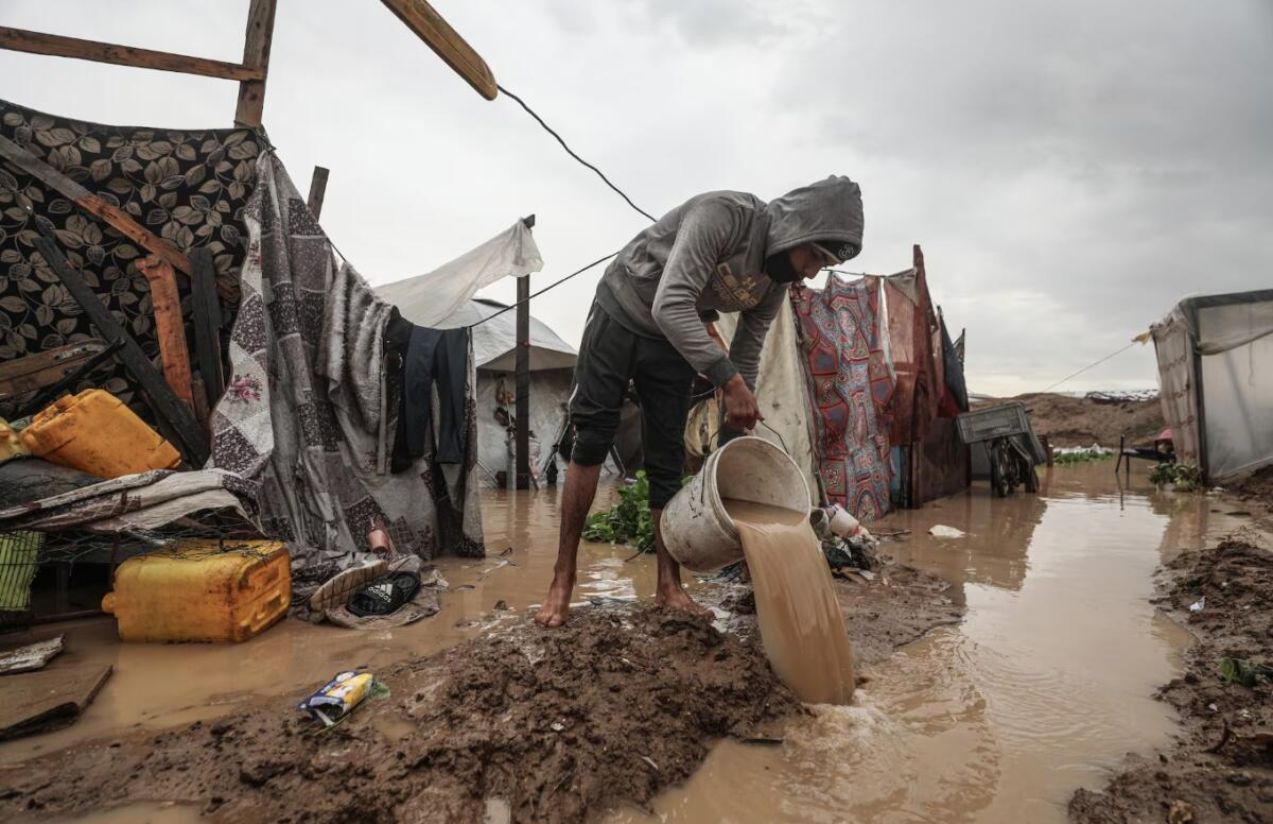
Intense storms that have battered the Gaza Strip in recent days have caused the deaths of several Palestinians and dramatically worsened the already dire humanitarian situation in the enclave. Heavy rainfall, strong winds, and low temperatures have especially affected displaced families living in makeshift tents, many of them without adequate protection from the weather.
According to reports cited by CNN, flooding submerged refugee camps and residential areas, sweeping away basic belongings and leaving hundreds of people without shelter. Children and the elderly are among the most vulnerable, as prolonged exposure to the cold has led to cases of hypothermia and respiratory illnesses.
Humanitarian organizations operating in Gaza warn that the combination of extreme weather, destroyed infrastructure, and shortages of medical supplies makes any rapid response extremely difficult. In addition, power outages and a lack of fuel are limiting the operation of hospitals and emergency centers.
Why do storms pose such a high risk in Gaza?
Because thousands of people are living in temporary shelters without proper drainage or heating, turning rain and cold into a direct threat to life, especially amid ongoing conflict and insufficient aid.
The international community now faces growing pressure to accelerate the delivery of humanitarian assistance and prevent the climate emergency from further worsening civilian suffering.