


The draw for the 2026 World Cup has defined the 12 groups that will make up the initial phase of the tournament, with 48 national teams distributed by pot according to their ranking and confederation. Host nations Mexico, Canada, and the United States were placed as the heads of Groups A, B, and D, respectively.
Among the most notable matchups is Group C, featuring Brazil and Morocco, a clash that could ignite the group stage, and Group H, where Spain will face Uruguay, Saudi Arabia, and Cape Verde.
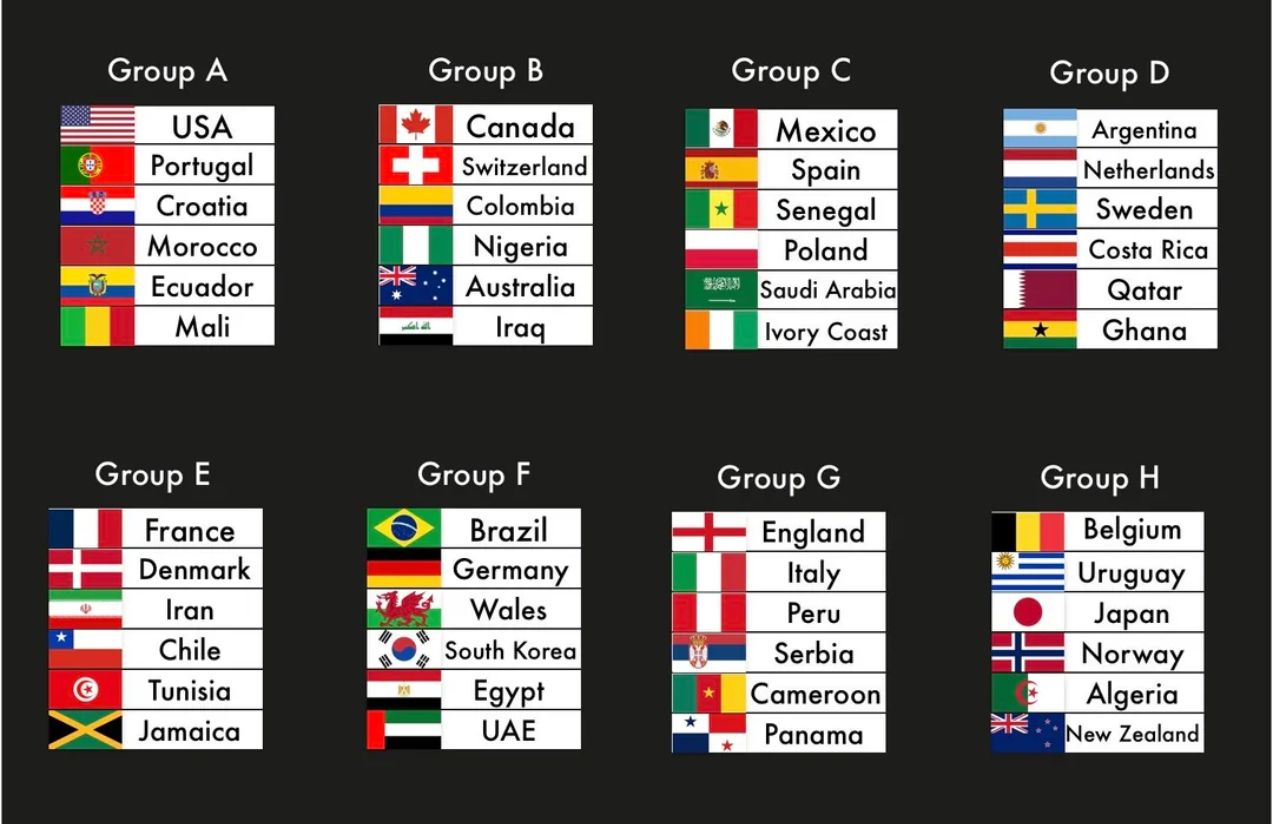
This format, with four teams per group, two direct qualifiers, and the best third-place teams advancing, is expected to produce a highly competitive opening phase, even for traditionally dominant national teams.
How open are the groups in this World Cup?
Much more than usual. The new structure and the expansion to 48 teams increase the potential for surprises, making this World Cup one of the most competitive in history.