




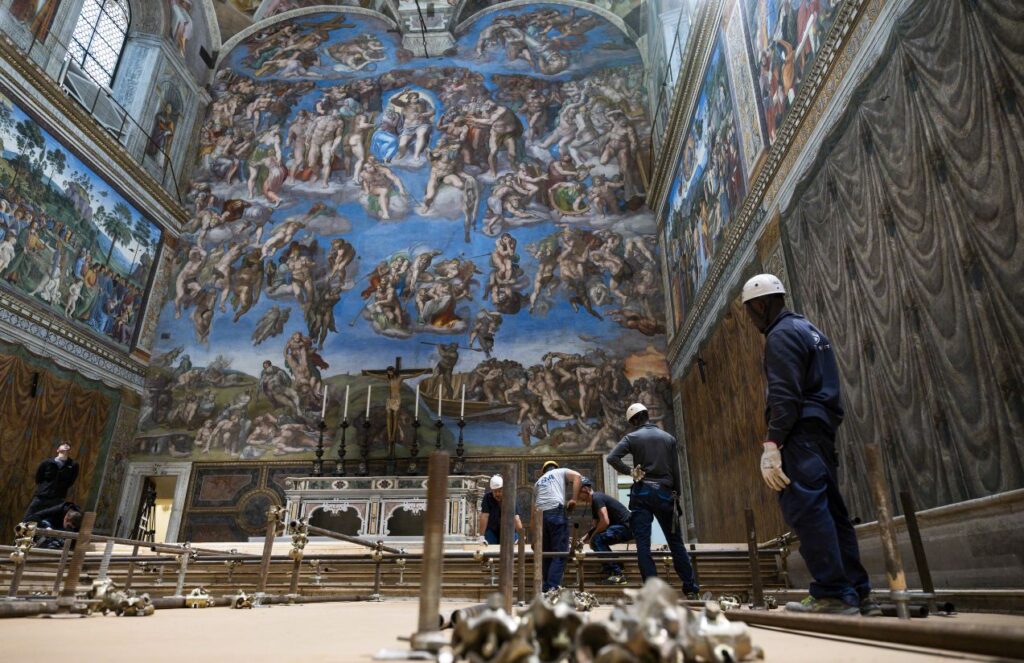
Recently, one of the most iconic masterpieces of Renaissance art, Michelangelo’s fresco “The Last Judgment,” has entered a new restoration process in the Sistine Chapel at the Vatican, the first of its kind in nearly 30 years.
Painted between 1536 and 1541, the monumental work will remain covered for approximately three months while expert restorers from the Vatican Museums’ Painting and Wooden Materials Restoration Laboratory carry out delicate cleaning tasks. The goal is to remove accumulated dust and micro-deposits that have dulled the fresco’s original colors and contrasts over time.

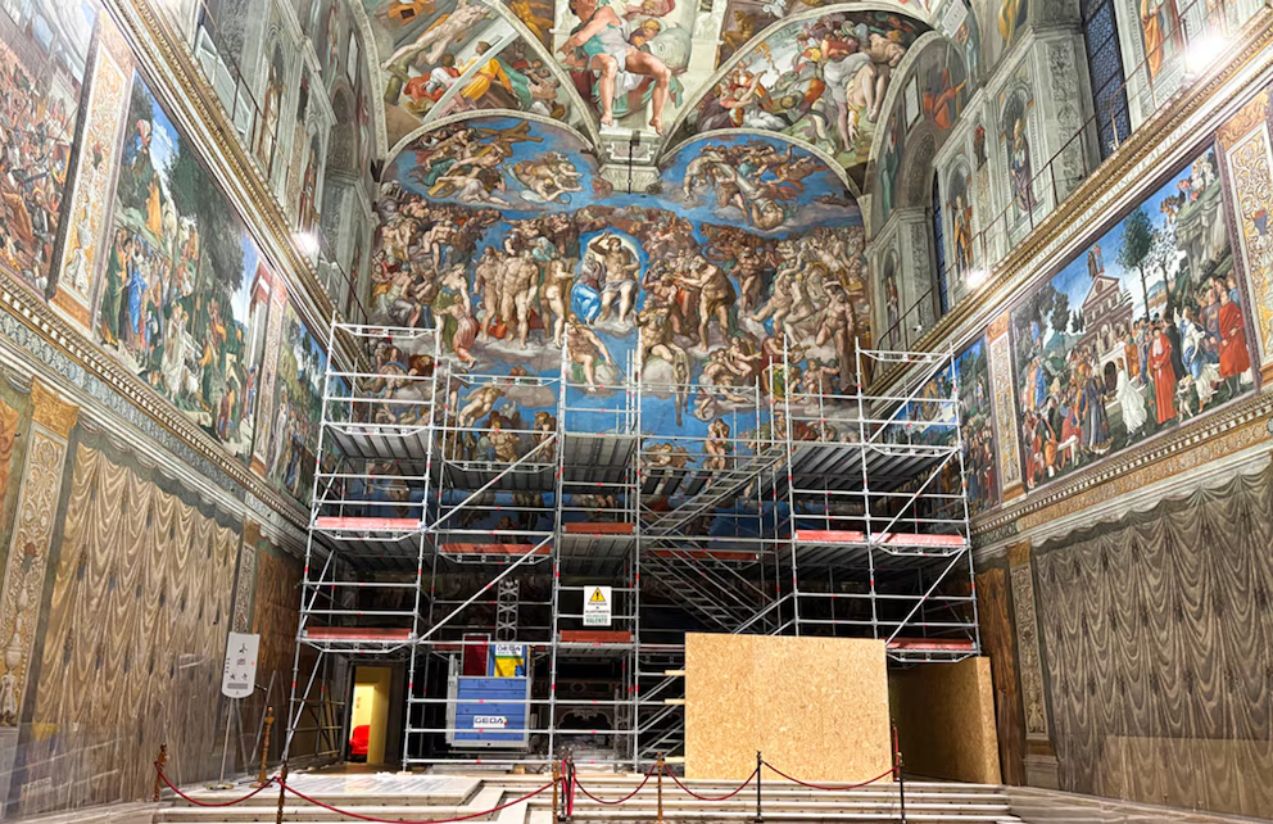

Although scaffolding will cover much of the artwork, the Sistine Chapel will remain open to visitors, who will be able to view a high-definition reproduction of the fresco during the restoration period.
This intervention aims to eliminate the whitish film that has softened the mural’s dramatic intensity and to restore the vibrant color palette originally envisioned by Michelangelo.
Why is this restoration so important?
Because it is the first deep cleaning since 1994 and seeks to preserve one of the most important works in art history for future generations.