

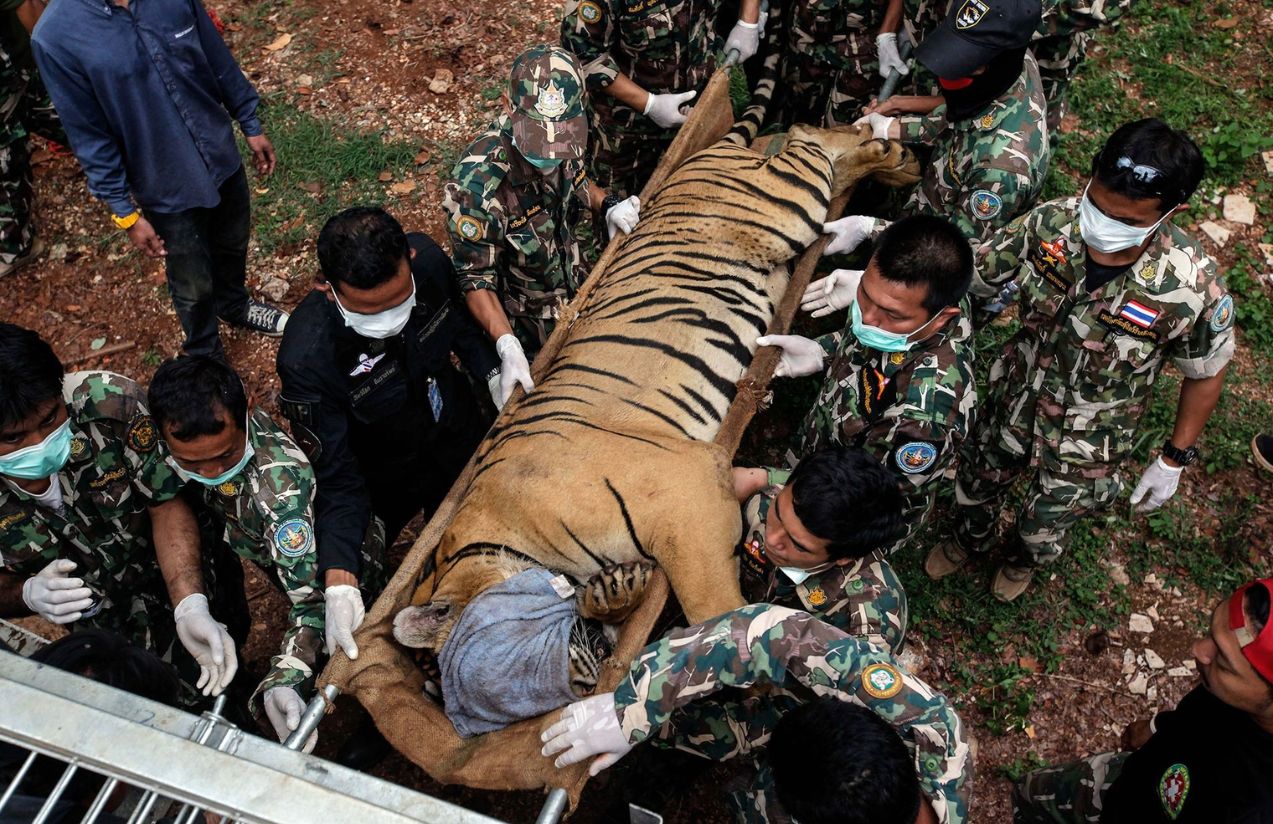

At least 72 tigers died in northern Thailand over a period of 10 days, initially puzzling authorities and veterinary experts. The deaths occurred at two tourist wildlife parks in Chiang Mai province, known for allowing close interaction between visitors and the animals.
Following laboratory tests, Thai officials confirmed the cause as the canine distemper virus (CDV), ruling out avian influenza and easing fears of a potential threat to humans. While CDV is highly contagious among animals, it is not considered transmissible to people, and no human cases have been reported.

Investigators also detected respiratory bacteria in some tigers, prompting stricter sanitary measures. Veterinary teams implemented a temporary closure of the parks, disinfection of facilities, and quarantine for surviving tigers. Staff members who had direct contact with the animals are under precautionary observation.
Before the outbreak, the parks housed more than 240 tigers. The sites will remain closed as authorities continue containment efforts and epidemiological monitoring.
Why does this outbreak matter?
Because it highlights how vulnerable large captive animals can be to infectious diseases and renews debate over health controls at wildlife tourism centers.