

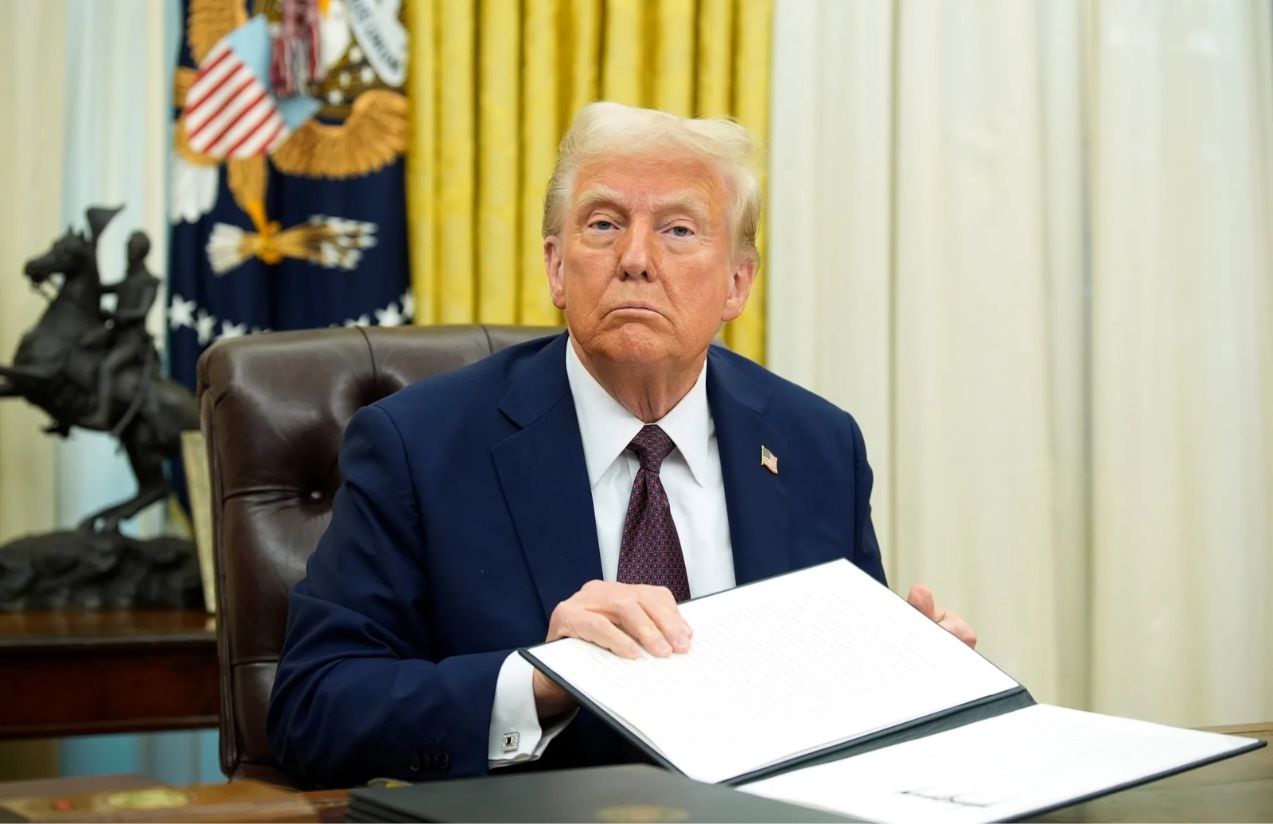

United States President Donald Trump announced an unprecedented measure: dollar bills in the United States will begin to feature his signature, something never before seen with a sitting president. The decision is part of commemorative changes marking the country’s 250th anniversary of independence.
According to the Treasury Department, the first redesigned bills will be the $100 notes, which are expected to enter circulation in 2026. The update would also remove, for the first time, the traditional signature of the Treasurer, a feature that has been present on U.S. currency since the 19th century.
Read More

The move has sparked debate among experts and former officials, as it breaks with decades of tradition in the design of paper money. While some view it as a political and economic symbol, others question the precedent it could set for the future.
Nevertheless, the government defends the change as a way to highlight a historic moment and recent economic achievements.
Why is it significant that Trump will sign U.S. dollars?
Because it would be the first time a sitting president’s signature appears on U.S. currency, breaking a tradition of more than 150 years and marking a symbolic shift in the country’s financial history.