
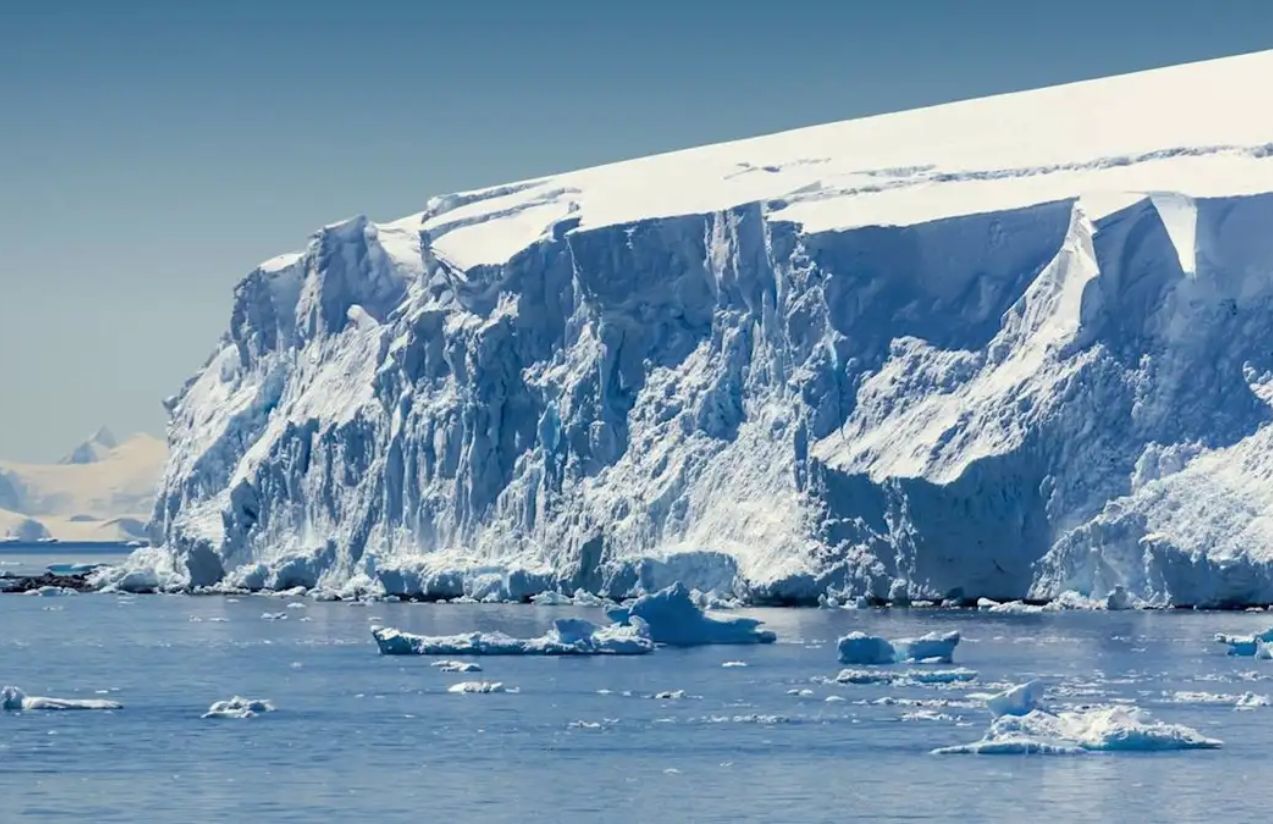
An international team of scientists has detected that the Thwaites Glacier, known as the “Doomsday Glacier,” has begun to move at an accelerated pace and may be entering an irreversible collapse process. This phenomenon was identified through the analysis of two decades of satellite data and GPS measurements, which show that the ice shelf has lost stability and its anchoring point to the seabed.
As the structure weakens, the glacier, covering nearly 192,000 square kilometers, could significantly contribute to global sea level rise, given its massive volume of ice and the way its retreat allows more ice to flow into the ocean.

Researchers explain that cracks have multiplied and expanded, reducing the internal cohesion of the ice and accelerating its movement toward the sea. This structural change not only highlights the fragility of the ice shelf but also underscores how climate change is affecting even the most remote and cold regions of the planet.
Could this collapse raise sea levels to dangerous levels for coastal areas?
Yes. If the process continues, it is estimated that it could add several centimeters to global sea levels, with serious consequences for coastal cities and ecosystems worldwide.